
Review · WALKING TOURS
Food Walking Tour – Nyamirambo, Kigali
Come hungry, walk slowly, taste widely. This three-hour food walk by Jollof’Appétit offers a useful way to meet Nyamirambo, Kigali’s lively western district and an important Islamic community, through nine tastings at five local stops. I like the short walking distances between venues, and I like that the food is served where local residents eat rather than in a staged tourist setting. The main concern is value: at $88 per person, you need a strong guide and generous portions to feel the price is justified.
The tour also gets high marks for friendly service and dietary flexibility. Kimberly’s pescetarian needs were accommodated, while guides including Joselyto and Myriam earned praise for good conversation and clear explanations. Still, the experience can feel more like a restaurant crawl than a food-and-market tour, and one disappointing outing included shared portions, tough meat, and little explanation of the dishes.
In This Review
- Key points to know before booking
- Why Nyamirambo makes a good food-walk setting
- Starting at Isame Restaurant on KN 170 Street
- The first cafés and restaurants: a taste of daily Kigali
- Tea, street snacks, and the middle of the walk
- Brochettes, chapati, and the portions question
- Daytime or nighttime: choosing the right departure
- Guide quality can make or break the experience
- Dietary needs and the no-alcohol format
- Who will enjoy this Kigali food walk?
- Practical value at $88 per person
- Should you book the Nyamirambo food tour?
- FAQ
- How long does the Nyamirambo food walking tour last?
- How much does the tour cost?
- Where does the tour begin?
- Where does the tour finish?
- How many food stops are included?
- Is alcohol included?
- What languages are available?
- Is hotel transportation included?
Key points to know before booking
- Five stops, nine tastings: You sample Rwandan staples, snacks, fruit, drinks, and brochettes over about three hours.
- Nyamirambo on foot: The route stays within the same district, with stops generally about five minutes apart.
- No alcohol: This is a non-alcoholic tour in an Islamic community, with juices, tropical fruit, tea, and other drinks instead.
- Day or night choice: The 12 pm departure is better for avoiding evening crowds, while nighttime brings more street activity.
- A real meal, not light grazing: Come hungry, since the food can add up quickly, though some portions may be shared.
- Guide quality matters: Strong guides can explain the customs and background behind each dish, which is important at this price.
Why Nyamirambo makes a good food-walk setting
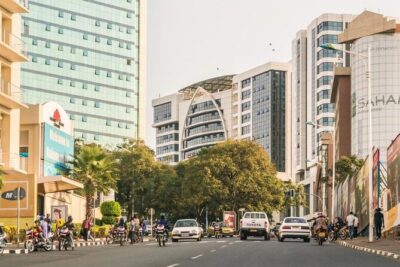
Nyamirambo gives you a different view of Kigali from the polished central districts. It is known as Kigali’s Big Apple, and its streets carry a strong sense of everyday life, commerce, faith, and community. The tour focuses on food, but the walking between stops is part of the point.
One appealing section is the painted ground in Nyamirambo’s car-free zone. It gives the walk a colorful visual break and makes it easier to focus on people, buildings, and street activity without traffic passing close by. You are not simply being driven from one restaurant to another, then returned to your hotel. You move through a real neighborhood under your own power.
The route remains compact. The food stops are generally around five minutes apart, so you do not need exceptional fitness. Still, wear comfortable shoes. Three hours of standing, walking, eating, and moving through crowded evening streets can feel longer than the distance suggests.
Nyamirambo’s Islamic character also shapes the food and drink choices. Alcohol is not part of the experience, and drugs are not allowed. If you want beer, wine, or another alcoholic option with your meal, this is not the right Kigali food tour. The Remera Food Walking Tour is the stated alternative for an alcohol-inclusive format.
More Food Experiences in Kigali:
- Rwanda Half-Day Walking Food Tour
★ 5.0 · 35 reviews - Kigali: Guided Art, History, and Food Tour with Moto Ride
★ 4.9 · 34 reviews - Kigali City Tour with Local Expert & Local Food
★ 5.0 · 8 reviews
Starting at Isame Restaurant on KN 170 Street
The tour begins at Isame Restaurant on KN 170 in Nyarugenge District’s Nyamirambo Sector. This detail matters because Isame has more than one location. You need the branch adjacent to Merez gas station and opposite Bauhaus Night Club, not another Isame address elsewhere in Kigali.
Parking can be difficult, so I would not plan on arriving in your own car and leaving it nearby for the afternoon or evening. A taxi or private driver is the simpler choice. Arrange to be dropped at the correct meeting point, then picked up at the final stop on KN 126 Street.
The opening stop is listed as a local restaurant, with about 20 minutes for a meal, food tasting, and an introduction to regional dishes. Expect the first course to set the tone for the rest of the walk. This is not a formal cooking class, so your guide’s ability to explain ingredients, customs, and eating habits will make a major difference.
That point is worth stressing. A good food walk should tell you why a dish matters, not only place it in front of you. Andrew praised explanations of the history and customs connected to each dish, while another outing felt thin because almost no background was provided. If your guide is less talkative, ask direct questions early: What is this made from? When do Rwandans eat it? Is it eaten by hand? Is it a home dish or a restaurant specialty?
The first cafés and restaurants: a taste of daily Kigali
The second stop is a local café, with around 15 minutes for a welcome drink, sightseeing, and another regional tasting. The café setting gives the tour a change of pace from the opening restaurant. You may receive a juice or another local refreshment, then continue with a snack or small dish.
The compact route helps here. You are not sitting through five full restaurant meals, which would make a three-hour tour too heavy. Instead, each stop offers a small piece of the local food scene. The drawback is that tasting portions can vary. One account described a bowl of rice and a small bowl of beans shared among three people, followed later by other shared plates.
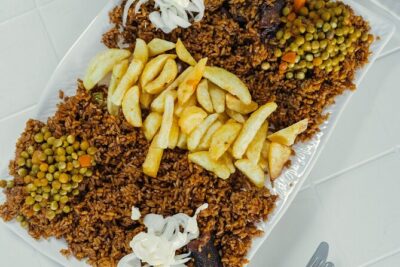
The third stop is another local restaurant, with about 25 minutes for snacks and food tasting. Dishes named for the tour include ugali with stew, beans, plantains, and prepared rice. These foods help you understand the everyday side of Rwandan eating better than a single high-end restaurant meal would.
Ugali is a firm maize-based staple found in many parts of East Africa. Here, it may be served alongside stew or another savory preparation. Beans and plantains add two familiar regional elements, but their seasoning and preparation can vary from one kitchen to another. The tour’s strength is that you taste several combinations instead of treating one plate as the complete definition of Rwandan food.
Tea, street snacks, and the middle of the walk
The fourth stop is another local restaurant, with about 25 minutes for tea, a meal, guided commentary, and food tasting. Spiced teas are part of the advertised drinks, and they offer a welcome pause after several savory bites.
This is also the point when appetite becomes important. The total experience includes enough food that you should avoid eating a large lunch immediately beforehand. Katrina specifically advised arriving hungry because there was a lot of food and drink. At the same time, do not assume every course will arrive as an individual serving. Portions may be shared, depending on the group and the stop.
The fifth and final food venue is a local café that combines coffee, tea, dessert, street food, snacks, and tasting time. It is scheduled for about 25 minutes. This creates a pleasant finish, since the tour moves beyond main dishes into sweet items, hot drinks, and quick local bites.
Expect tropical fruits and juices somewhere along the route. The exact selection is not fixed in the information provided, so I would treat the fruit as a seasonal part of the experience rather than expect one particular item. The same applies to the dessert and café offerings. The tour gives you a broad food outline, but individual dishes can change.
A different idea for another day in Rwanda:
- Kigali City Tour
★ 5.0 · 452 reviews - Kigali: Walking Tour with a Local Guide
★ 4.9 · 234 reviews - One-day Akagera National Park Game Drive with a Choice 4×4
★ 5.0 · 105 reviews - Private Full-day Kigali City Tour with Pickup and Lunch
★ 5.0 · 79 reviews
Brochettes, chapati, and the portions question
Smoky brochettes, chapati, rice, beans, plantains, and ugali give this walk its strongest food identity. Brochettes are grilled skewers, often associated with casual evening dining in Rwanda. Chapati adds a soft, flatbread-style element that works well with savory foods.
The brochette stop may be a highlight if the meat is well prepared. It may also be the most uneven part of the walk. One poor outing included tough meat and a very small shared allocation. That does not prove every group receives the same portion or quality, but it is a fair warning at an $88 price point.
The price covers more than raw food. You are paying for a guide, organization, several venues, neighborhood orientation, and the chance to move between places without arranging the order yourself. The value improves if the guide explains the food well and your group receives a satisfying range of portions. It weakens if you mainly receive small shared dishes with little context.
I would judge the price against your travel priorities. If you want the cheapest way to eat beans, rice, or brochettes, you can likely order those dishes independently at local restaurants. If you want a planned route, multiple tastings, and help making sense of what you are eating, the fee may be reasonable. Just do not book it expecting a luxury dining tour.
Daytime or nighttime: choosing the right departure
The daytime tour, especially the 12 pm option, is the safer pick if crowds bother you. Evening visits can be jam-packed, making walking slower and conversations harder. You may also prefer daylight if this is your first visit to Nyamirambo and you want to pay closer attention to the streets and painted car-free zone.
Nighttime has its own appeal. The district takes on more energy, and brochettes and street food fit naturally into an evening schedule. If you enjoy busy streets and do not mind squeezing through crowded areas, the later departure may feel more social and lively.
There is a special timing rule for Umuganda, Rwanda’s nationwide community work morning. It takes place on the last Saturday of every month from 8 am to 11 am, and tours on those Saturdays begin at 3:30 pm. Check the departure time before booking that date.
The tour lasts about 2.5 to 3 hours, with availability determining the exact start time. Children under 17 must be accompanied by an adult. The experience is not suitable for babies under one year or people over 70, according to the stated conditions.
Guide quality can make or break the experience
The strongest praise centers on the guides. Myriam was described as a good communicator who stayed helpful from the first message through the farewell. Joselyto received credit for easy conversation and fun stories, and another guide was praised for explaining the history and customs connected with the food.
That matters because the route itself is simple. The venues are close together, and you could visit restaurants without a guide. What you cannot easily recreate is a thoughtful explanation of what you are eating, how the dishes fit into local life, and why these particular places were selected.
The weaker experience raises the opposite concern. The guide was pleasant but lacked energy, and the guest had to pull information out through questions. If cultural context is your main reason for booking, you should be ready to participate. Ask questions, request details, and tell the guide if you want more information about ingredients or preparation.
Languages available include English, French, Swahili, and Kinyarwanda. That is useful for mixed-language groups, but the actual quality of the experience will still depend on the individual guide assigned that day.
Dietary needs and the no-alcohol format
The food is presented as Rwandan and regional rather than built around one strict menu. A pescetarian guest was accommodated, which is encouraging if you do not eat meat. Still, you should state your dietary needs when booking and confirm them with the guide at the start.
Do not assume that every restriction can be handled equally well. The provided information confirms accommodation for a pescetarian diet, but it does not promise vegan, gluten-free, allergy-safe, or halal arrangements. Since Nyamirambo has a strong Islamic community, the setting may feel comfortable for some Muslim visitors, but the tour details do not provide a formal halal certification.
The non-alcoholic rule is clear. Drinks include tropical juices, fruit, spiced tea, and coffee, while alcohol and drugs are prohibited. For some people, that is a limitation. For others, it keeps the focus on the food and the neighborhood.
Who will enjoy this Kigali food walk?
I would recommend the tour to you if you want a first introduction to Rwandan food without spending days researching restaurants. It suits curious eaters who enjoy walking, small tastings, local cafés, and a guide who can add cultural context between meals.
It also works well for visitors with limited time in Kigali. Five stops in one compact district let you sample several dishes in a single afternoon or evening. The short walks make the format more manageable than a long city hike, though comfortable shoes remain essential.
You may want to skip it if you prefer to choose every restaurant yourself or if you mainly want markets, cooking demonstrations, and detailed food instruction. One person expected a more market-oriented experience and felt the restaurant stops were easy to arrange independently. That criticism is fair. This is a neighborhood restaurant and café walk, not a market tour or cooking lesson.
It may also disappoint you if you expect large individual portions at every stop. Some food may be shared, and quality can vary. Come hungry, but keep your expectations focused on variety and access rather than a succession of full private meals.
Practical value at $88 per person
At $88, this is a premium food experience for Kigali. The fee makes the most sense when the guide is engaging, the route runs smoothly, and you receive enough food and drink to replace a meal. Nine tastings across five stops sounds substantial, and the total volume appears generous enough that you should not eat heavily beforehand.
The price makes less sense if you already feel comfortable ordering local dishes on your own. You could spend less by visiting a couple of restaurants independently, but you would give up the organized route, translations, neighborhood orientation, and the chance to sample several items without committing to full plates.
For the best value, book the daytime departure if crowds interfere with conversation. Tell the operator about dietary needs in advance. Confirm the correct Isame meeting point, and arrange taxi transport rather than relying on nearby parking. Finally, judge the guide as part of the product, not as a minor extra. On this tour, the guide’s stories and explanations are what separate a memorable cultural meal from a series of ordinary restaurant visits.
Should you book the Nyamirambo food tour?
Book it if you want a convenient, social introduction to Rwandan food and you value eating in everyday Nyamirambo more than visiting a formal market. The strongest version of this tour includes tasty dishes, generous drinks, easy walking, and a guide like Myriam or Joselyto who keeps the conversation moving.
Think twice if $88 feels high for shared tastings, or if you want a detailed lesson on cooking and food traditions. In that case, independent restaurant visits may give you better control. For most first-time visitors who want a guided taste of Kigali, I would choose the 12 pm departure, arrive hungry, wear good shoes, and ask plenty of questions.
FAQ
How long does the Nyamirambo food walking tour last?
The tour lasts about three hours, with the full experience described as approximately 2.5 to 3 hours.
How much does the tour cost?
The price is $88 per person.
Where does the tour begin?
It begins at Isame Restaurant on KN 170 in Nyamirambo Sector, Nyarugenge District. Use the branch next to Merez gas station and opposite Bauhaus Night Club.
Where does the tour finish?
The tour finishes on KN 126 Street in Kigali, Rwanda.
How many food stops are included?
You visit five food and drink stops, with nine tastings in total.
Is alcohol included?
No. This is a non-alcoholic tour, and alcohol and drugs are not allowed. Drinks can include juices, tropical fruit, spiced tea, coffee, and other non-alcoholic refreshments.
What languages are available?
Guides are available in English, French, Swahili, and Kinyarwanda.
Is hotel transportation included?
No. Hotel pickup and drop-off are not included. Parking may be difficult, so arranging a taxi or driver for drop-off and pickup is recommended.
More Walking Tours in Kigali
- Kigali Walking Tour
★ 4.5 · 78 reviews - 1 Day Canopy Walk Adventure in Nyungwe Forest National Park
★ 5.0 · 32 reviews - Kigali City Center Guided Walking Tour
★ 5.0 · 19 reviews - Kigali: City Guided Walking Tour
★ 5.0 · 12 reviews
Just added around Kigali
- Kigali City Tour and Sightseeing★ 5.0 · 3 reviews
- Home staying experience★ 5.0 · 3 reviews
- 3-Day Rwanda Gorilla Safari★ 4.5 · 3 reviews
- 2 Days Gorilla Trekking Rwanda★ 5.0 · 3 reviews
- 1 Day Rwanda Gorilla Trekking★ 5.0 · 3 reviews
- Kigali: Traditional Carpet Weaving (Ikirago) + amazing views★ 5.0 · 3 reviews
- Kigali: Guided City Tour let us learn, enjoy together ❤️★ 3.6 · 3 reviews
- 1 Day Gorilla Trekking Safari in Rwanda Volcanoes National Park★ 5.0 · 3 reviews
Walking Tours, compared.

1 Day Canopy Walk Adventure in Nyungwe Forest National Park
Read our review →


Local Community Tour(Cultural, Coffee,Village walk,Local food)
Read our review →Browse the lists this tour appears in