
Review · CITY TOURS
Kigali: City Guided Walking Tour
Kigali rewards those who walk slowly. This $25, two-hour tour offers a useful first look at Rwanda’s capital, linking Imbuga City Walk, the Belgian Peacekeepers Memorial, Nyamirambo, and local shopping stops. I like the mix of everyday city life and serious history, plus the chance to see Kigali from street level rather than through a car window. The main consideration is the walking itself: uneven surfaces, sun, and a fairly active route may not suit anyone with limited mobility.
I also like the local touch. Guides such as Jeremiah, also called Jerry, grew up in Kigali and can answer practical questions about life in Rwanda, not just point out landmarks. The shopping time is helpful without being pushy, and guides have assisted with bargaining, restaurant directions, and even finding a taxi. Just confirm the meeting details before setting out, since one recent booking had a one-hour delay caused by an agency mistake.
In This Review
- Key points at a glance
- Why a Kigali walking tour makes sense
- Meeting at Norrsken House Kigali
- Imbuga City Walk and Kigali’s urban center
- The Belgian Peacekeepers Memorial
- Nyamirambo Women’s Center and the old town
- Biryogo: food, shops, and neighborhood character
- Views from Kigali’s hills
- What the guides add to the experience
- Is $25 good value for two hours?
- Who should book this walk?
- Should you book the Kigali City Guided Walking Tour?
- FAQ
- How much does the Kigali City Guided Walking Tour cost?
- How long does the tour last?
- Where does the tour begin?
- How will I recognize the guide?
- What language is the tour conducted in?
- Which places are included?
- Is shopping included?
- Are meals, drinks, and transport included?
- What should I bring?
Key points at a glance
- Start at Norrsken House Kigali: Meet your guide at 1 KN 78 St, where the Iriza Tours & Safaris office is located.
- Walk through four sides of Kigali: The route combines an urban plaza, a memorial, Nyamirambo, and local craft shopping.
- Hear personal city stories: Jeremiah, Jerry, Darlene, and Jeremy have been praised for clear explanations and an easy conversational style.
- Shop without pressure: The tour includes help with local markets and Made-in-Rwanda crafts, including bargaining when needed.
- See Kigali from the hills: Expect broad views of rolling hills, winding streets, and the city’s clean, green character.
- Plan for a real walk: Comfortable shoes, water, sun protection, and weather-appropriate clothing are essential.
Why a Kigali walking tour makes sense
Kigali is often used as a base for gorilla trekking, safari trips, or a flight home. It can be tempting to treat the capital as a place to sleep between bigger adventures. I think that misses the point.
A short walk gives you a better feel for how the city works. You see people moving through central streets, local goods on display, and the contrast between modern urban spaces and older neighborhoods. Your guide can also explain how Kigali changed after the 1994 genocide, giving the city’s present-day order and energy more meaning.
This is not a museum-heavy tour or a long historical lecture. It is a moving conversation, with stops along the way. You should expect a broad introduction rather than an exhaustive account of Kigali. For a first visit, that is often the right scale.
The tour has a five-star rating from 12 reviews, with particular praise for the guides’ warmth, city knowledge, and willingness to answer questions. The strongest feedback centers on Jeremiah, Jerry, Darlene, and Jeremy. Guide assignments can vary, so you may not receive a specific person, but the repeated praise points to the value of the local guiding style.
More Walking Tours in Kigali:
- Kigali: Walking Tour with a Local Guide
★ 4.9 · 234 reviews - Kigali Walking Tour
★ 4.5 · 78 reviews - Rwanda Half-Day Walking Food Tour
★ 5.0 · 35 reviews
Meeting at Norrsken House Kigali
The tour begins at Norrsken House Kigali, 1 KN 78 St, in Kigali Province. Meet your guide at the entrance. The guide should be wearing an Iriza Tours & Safaris T-shirt, which makes the meeting point easier to manage in a city you may not know yet.
Norrsken House is a practical starting place because it sits near the central urban portion of the route. Transportation to the meeting point is not included unless arranged beforehand, so you need to make your own way there.
I would arrive a little early. Kigali is manageable, but a first-time arrival still involves finding the right street, checking your phone, and getting settled before the walk begins. The tour includes free WiFi, which can be handy during the outing, especially if you need to check a message or arrange transport afterward.
The advertised duration is two hours. The stop descriptions suggest a full route with several visits, so the pace may feel active. If you want extra time for browsing, photography, or a long conversation at each stop, ask your guide at the start how the timing will work.
Imbuga City Walk and Kigali’s urban center
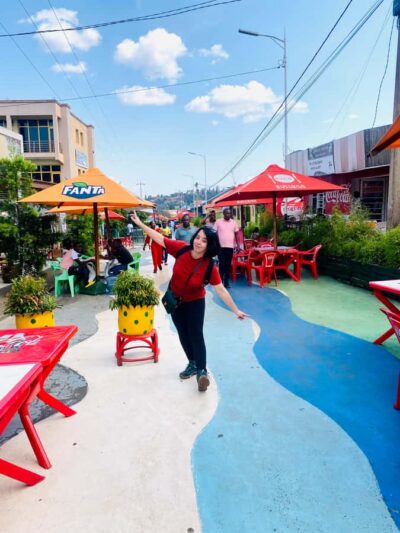
The first main stop is Imbuga City Walk, where you have time for sightseeing, photographs, local shopping, and a guided look at the city center. This is the part of the tour that helps you get your bearings quickly.
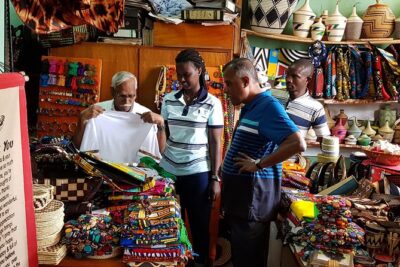
Expect to see Kigali as a working capital, not a staged attraction. The guide can point out the character of the central streets and explain how daily life unfolds around them. The route is designed to put you near local vendors and Made-in-Rwanda crafts, making this a good moment to ask about materials, styles, and fair prices.
Shopping is included as part of the experience, but you are not required to buy anything. That matters. A guide can help you understand what you are looking at and assist with bargaining, while also helping you avoid an awkward exchange if you are unsure how much to offer.
The strongest practical benefit here is context. A craft item means more when you know whether it is locally made, what it is used for, and how the price fits the local market. You might find this stop more useful for browsing and learning than for serious souvenir hunting.
The Belgian Peacekeepers Memorial
The Belgian Peacekeepers Memorial brings a quieter and more solemn mood. You visit with the guide and receive an explanation of its place in Rwanda’s painful recent past.
This is one of the most important stops because it adds gravity to the rest of the walk. Kigali’s clean streets and calm public spaces can give a first impression of order and confidence. The memorial reminds you that the country’s current character cannot be understood without facing the violence of 1994 and the years that followed.
One account of the tour began at the memorial because it offered an immediate introduction to Rwanda’s darkest chapter. That can be a strong choice, though the emotional weight may surprise you if you expected a light city stroll. Give yourself room to listen. Photography is allowed, but respect the setting and local customs.
The stop is guided rather than self-directed. That is valuable here because a short plaque or quick photograph cannot explain the full significance of the site. A guide who grew up in Kigali can also help connect national events with the city you are seeing today, while keeping the discussion suitable for a walking tour.
More tours and experiences to compare
- Kigali City Tour with a Local Guide and Driver
★ 5.0 · 49 reviews - Kigali: Guided Art, History, and Food Tour with Moto Ride
★ 4.9 · 34 reviews - Kigali City Center Guided Walking Tour
★ 5.0 · 19 reviews - Private Half-Day Guided Kigali City Tour with Coffee Break Included
★ 5.0 · 6 reviews
Nyamirambo Women’s Center and the old town
The route continues to the Nyamirambo Women’s Center, in one of Kigali’s best-known older neighborhoods. Here the tour includes walking, sightseeing, photographs, and shopping.
Nyamirambo gives you a different view from the central district. You are closer to neighborhood life, local businesses, and the social texture of an older part of the city. The point is not simply to collect another photograph. It is to see how Kigali feels beyond its central streets.
The center also gives the tour a community and craft angle. You can ask about local work and look for Made-in-Rwanda items. Shopping help is particularly useful here if you are interested in buying something but do not know how to judge quality or negotiate politely.
Keep your expectations realistic. This remains a short walking visit, not a full workshop or extended community program. You may have enough time to browse and ask questions, but not enough time for a long activity at every stop. If a particular craft or cultural detail interests you, tell the guide early so the limited time can be used well.
The streets may include uneven surfaces, and the combination of walking and shopping can become tiring in hot weather. Wear shoes that you would happily use for two hours on mixed pavement.
Biryogo: food, shops, and neighborhood character
Biryogo is another stop where the tour focuses on sightseeing, shopping, and walking through a lively part of Kigali. The supplied details do not promise a meal, so do not arrive expecting lunch or drinks to be included.
What you get instead is a chance to see another part of the city and ask questions as you go. The guide may help you understand what is being sold, where locals shop, and how the area fits into Kigali’s daily rhythm. This is the sort of stop that works best when you stay curious rather than rushing to the next landmark.
One particularly useful detail from the tour feedback is that a guide accompanied a participant to a restaurant afterward and helped find a taxi to the airport. That was extra assistance, not a guaranteed part of the package, but it shows how a good guide can help turn a short tour into practical orientation for the rest of your day.
Food and drinks are not included. If you want to eat in Biryogo, ask the guide whether there is time and what the arrangements would be. Do not assume the scheduled two hours includes a sit-down meal.
Views from Kigali’s hills
Kigali is known as the City of a Thousand Hills, and the tour includes the chance to see its rolling hills and winding streets from a panoramic viewpoint or elevated section of the route.
The view is not just a scenic pause. It helps explain Kigali’s shape. Roads rise and fall, neighborhoods spread across slopes, and the city feels less like a flat grid than many capitals. Bring your camera, but spend a moment looking beyond the phone screen. The hills are one of the clearest ways to understand the city’s physical character.
Weather matters here. Sun, heat, or sudden changes in conditions can affect your comfort, so bring sunscreen, a hat, and water. The tour asks you to bring a water bottle, but plastic bottles are not allowed. Use a reusable bottle instead.
What the guides add to the experience
The guide may be the deciding factor in how much you get from this tour. The strongest comments describe Jerry as personable, clear, and able to offer a perspective shaped by growing up in Kigali. Darlene was praised for strong explanations, good communication, and staying a few extra minutes to help with shopping. Jeremy was also singled out for bringing the city and its past to life.
Those details point to a tour built around conversation. You can ask about ordinary life in Rwanda, the city’s transformation after the 1994 genocide, local customs, or where to find crafts. That is more useful than memorizing a list of dates.
Guide quality can vary from one departure to another, and a particular guide cannot be guaranteed from the information provided. Still, the pattern is encouraging. The guides appear willing to adjust the walk, answer random questions, and help with practical matters when time allows.
Communication before the tour has generally been described as clear and professional. One serious delay did occur, with a guide arriving an hour late after an agency error. The guide gave notice about 20 minutes beforehand and apologized several times, but the incident is worth keeping in mind if you have a flight or another fixed appointment immediately afterward.
Is $25 good value for two hours?
At $25 per person, this is not the cheapest way to wander around Kigali, but the value is reasonable if you use the guide well. You are paying for a local escort, historical explanation, access to several parts of the city, shopping assistance, and help interpreting what you see.
The price makes the most sense for a first day in Kigali. You get orientation without committing to a full-day excursion. It can also work well before or after gorilla trekking, when you may want a city experience but do not have the energy for a large program.
The value drops if you mainly want a long shopping session, a meal, or a deep visit to one museum. None of those is the central purpose here. This is a sampler, and its strength is the range of stops connected by local conversation.
Optional entry fees for Choose Kigali Art Gallery are not included. The itinerary allows for a local art gallery or cultural center, but the gallery fee is extra if that optional stop is chosen. Meals, drinks, and transport to and from Norrsken House are also extra.
Who should book this walk?
I would recommend it to first-time visitors who want to understand Kigali before setting off on a wider Rwanda trip. It also suits solo visitors who value a local conversation, couples looking for a short cultural outing, and anyone who wants help with shopping without being pushed into purchases.
It is a good fit for people who enjoy walking at a moderate pace and asking questions. The tour is conducted in English, and the guide’s role is central to the experience.
I would be cautious if you use a wheelchair, have a mobility impairment, or find uneven streets difficult. The tour is not suitable for wheelchair users or people with mobility impairments. Anyone sensitive to heat should bring water, sunscreen, and a hat, and wear weather-appropriate clothing.
Free cancellation is available up to 24 hours before the tour for a full refund. You can also reserve now and pay later, which helps if your Rwanda schedule may change.
Should you book the Kigali City Guided Walking Tour?
Book it if you want a compact, human introduction to Kigali rather than a checklist of sights. The Belgian Peacekeepers Memorial gives the walk substance, Nyamirambo and Biryogo bring you closer to everyday neighborhoods, and Imbuga City Walk provides a practical place to see crafts and ask questions.
I especially like this tour for a first or final day in the capital. It can help you understand where you are, choose souvenirs with more confidence, and arrange your next move. Just allow extra time around the start if you have a flight, wear proper walking shoes, and do not expect meals or transport to be part of the $25 price.
FAQ
How much does the Kigali City Guided Walking Tour cost?
The tour costs $25 per person.
How long does the tour last?
The advertised duration is two hours.
Where does the tour begin?
The meeting point is the entrance of Norrsken House Kigali, 1 KN 78 St, Kigali, Rwanda.
How will I recognize the guide?
Your guide should wear a T-shirt with the Iriza Tours & Safaris logo.
What language is the tour conducted in?
The live tour guide speaks English.
Which places are included?
The route includes Imbuga City Walk, the Belgian Peacekeepers Memorial, Nyamirambo Women’s Center, Biryogo, and a visit to a local art gallery or cultural center.
Is shopping included?
Yes. The tour includes shopping stops and assistance with bargaining in local markets. Entry to Choose Kigali Art Gallery, if selected, costs extra.
Are meals, drinks, and transport included?
No. Meals and drinks are not included, and transportation to or from Norrsken House is not included unless arranged in advance.
What should I bring?
Bring comfortable walking shoes, a sun hat, a camera, sunscreen, and water in a reusable bottle. Plastic bottles are not allowed, and the route includes uneven surfaces.
More City Tours in Kigali
- Kigali City Tour
★ 5.0 · 452 reviews - Private Full-day Kigali City Tour with Pickup and Lunch
★ 5.0 · 79 reviews - Kigali E-Bike City Tour with Breakfast
★ 4.9 · 73 reviews - Kigali City Tour
★ 5.0 · 59 reviews
Just added around Kigali
- Kigali City Tour and Sightseeing★ 5.0 · 3 reviews
- Home staying experience★ 5.0 · 3 reviews
- 3-Day Rwanda Gorilla Safari★ 4.5 · 3 reviews
- 2 Days Gorilla Trekking Rwanda★ 5.0 · 3 reviews
- 1 Day Rwanda Gorilla Trekking★ 5.0 · 3 reviews
- Kigali: Traditional Carpet Weaving (Ikirago) + amazing views★ 5.0 · 3 reviews
- Kigali: Guided City Tour let us learn, enjoy together ❤️★ 3.6 · 3 reviews
- 1 Day Gorilla Trekking Safari in Rwanda Volcanoes National Park★ 5.0 · 3 reviews
City Tours, compared.


Private Full-day Kigali City Tour with Pickup and Lunch
Read our review →

Kigali City Tour: History, Art and Local Highlights.
Read our review →Browse the lists this tour appears in